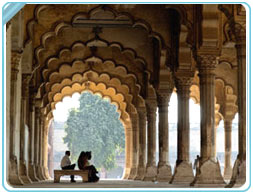
 The
interior hall is octagonal in shape and measures 58' in diameter and 80'
in height from the pavement to the soffit (first ceiling) and has an
arrangement of four rooms on the sides and is rectangular and four
octagonal rooms at the corners and all are interconnected through
passages. There is a double storeyed arrangement of the roofs and
passages- the upper set exactly corresponds to the lower one i.e. four
rectangular rooms on the sides and four octagonal small rooms at the
corners, all interconnected by passages.
The
interior hall is octagonal in shape and measures 58' in diameter and 80'
in height from the pavement to the soffit (first ceiling) and has an
arrangement of four rooms on the sides and is rectangular and four
octagonal rooms at the corners and all are interconnected through
passages. There is a double storeyed arrangement of the roofs and
passages- the upper set exactly corresponds to the lower one i.e. four
rectangular rooms on the sides and four octagonal small rooms at the
corners, all interconnected by passages. The radiating corridors on the ground floor connect the main hall with the corner rooms. Barring the southern side all the other sides have been closed with screens divided into small compartments filled with glass pieces. This glass work is seen on all the external sides of the tomb as well as on the upper storey. The glass pieces show amazing uniformity and have been very skillfully manufactured. They appear slightly milky in color to give a translucent look rather than transparent. The mortuary hall is an example of wonderful architecture and a great finish. The panels on its dados have beautiful floral designs in high relief or carvo-relievo with the borders in inlaid conventionalized motifs. An exquisitely developed marble jali screen (called Jhajjhari) encloses the monument. The inlay work on its borders and the graceful jalies are one the highs of medieval architecture.